On Seeing Art in the World
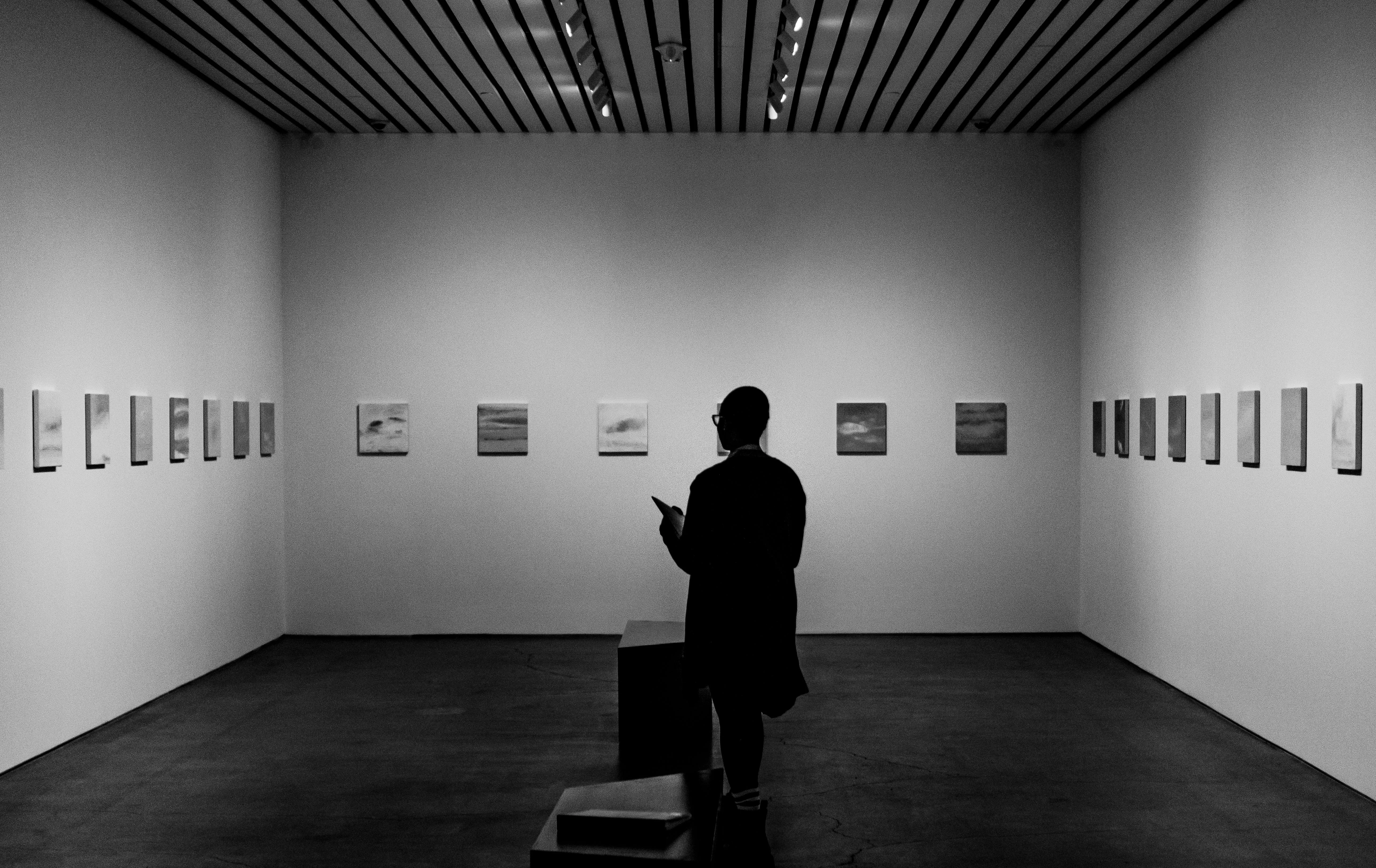
There's a particular quiet that lives inside a good gallery — the kind where the floor is polished concrete, the walls are bare, and a row of small paintings asks you to slow down to their size. I took the photo above in a room like that. One visitor, a wall of little seascapes, and no sound except the building. I could have stood there for an hour. Galleries are designed to make you pay attention, and when they work, they really work.
But I've come to believe that the gallery is the smallest part of where art actually lives.
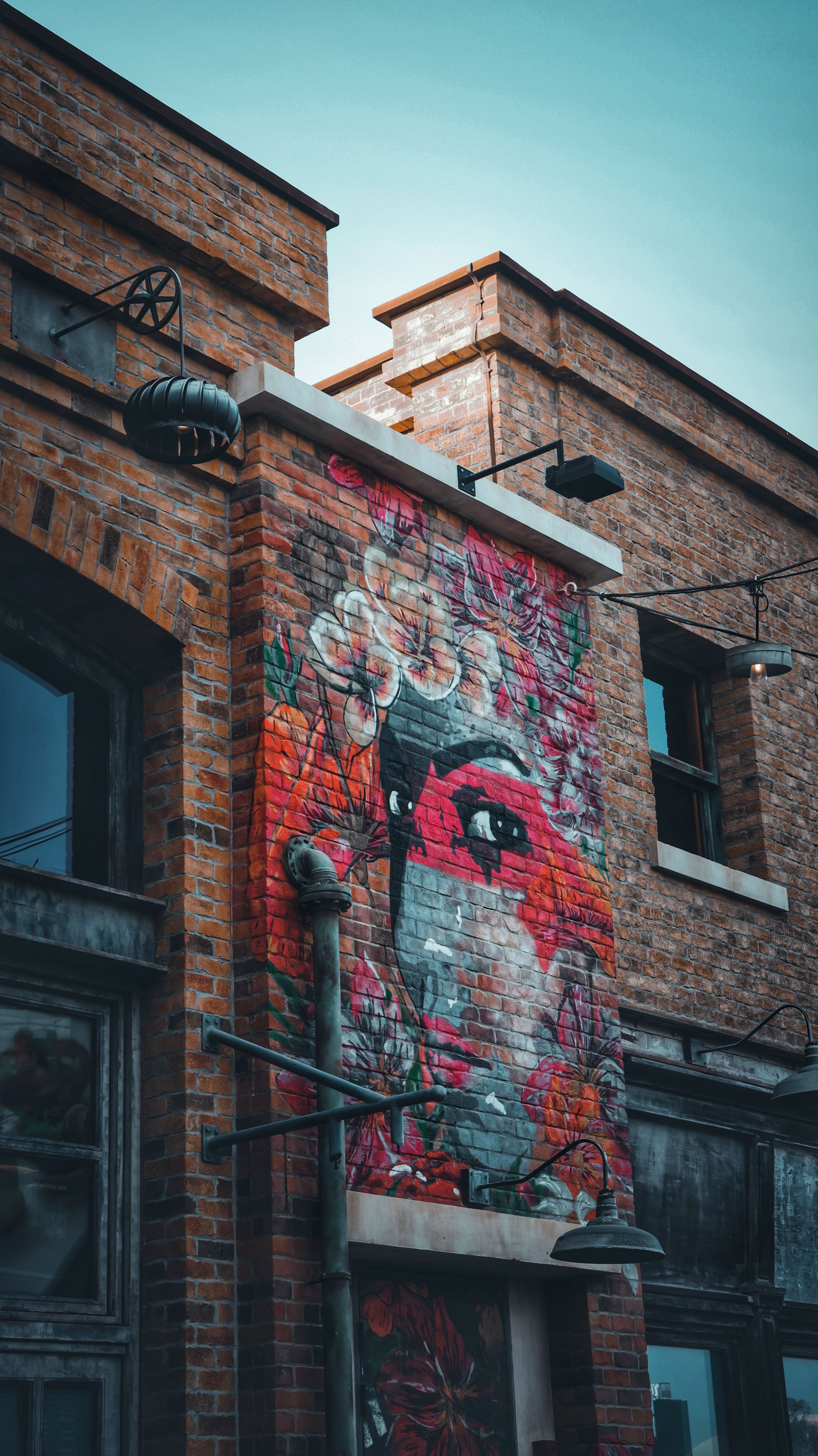
Walk a few blocks in almost any city and you'll find work that nobody framed or insured. A three-story bird painted across old brick, weather already softening its edges. Street art has a freedom that gallery work can envy — it's made for everyone, it asks no permission, and it accepts that it won't last. I love the impermanence of it. The wall will be painted over, the colors will fade, and that's part of the piece. It exists fully in the present tense.
The art nobody calls art
Then there's the stuff that isn't trying to be art at all.
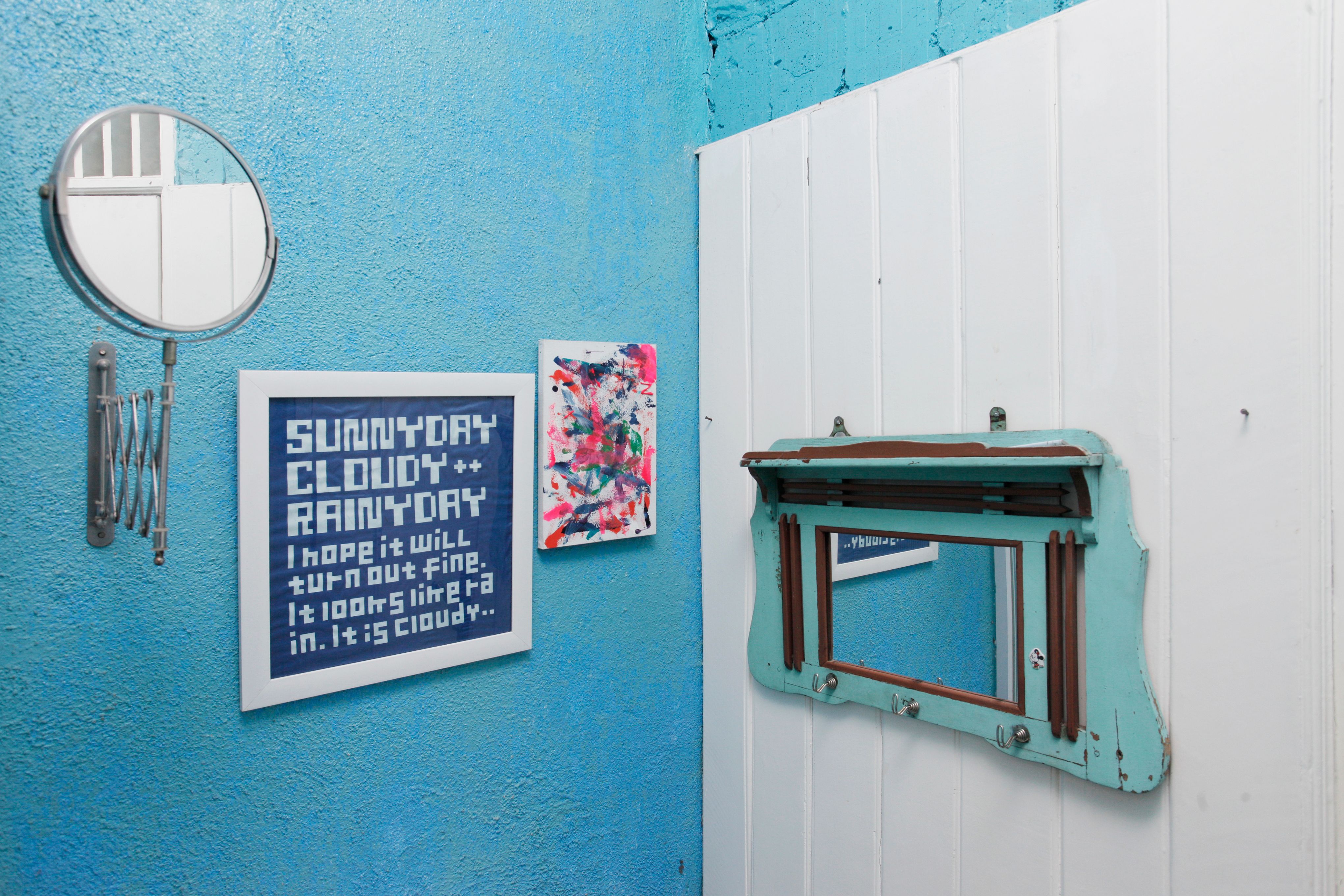
A turquoise wall in some back room: a hand-lettered print about the weather, a small abstract taped beside it, a round mirror, the rusted frame of an old window someone decided to keep. No one curated this — it accumulated. And yet the color, the arrangement, the worn textures do everything I'd want a composition to do. I find these accidental still lifes more often than I find paintings, and they teach me more.
Seeing this way is a habit you can build. Once you start counting the unofficial art — the murals, the shop signs, the way light falls through a dirty window, the palette of a fruit stand — the world gets noisier and more generous. You realize taste isn't something you only exercise in museums. You're composing all the time, just by deciding what's worth looking at.
This is also where most of my own work comes from. I rarely get ideas in galleries; I get them on walks, in cheap cafés, on the sides of buildings. The gallery is where art goes to be taken seriously, but the world is where it's actually made and found. I try to keep both doors open — to give my paintings the stillness of that quiet room and the aliveness of that brick wall.
Go look. It's everywhere, and most of it is free.